Dharshini

Please wait...

Endoscopy Surgery

Welcome Dharshini Hospital

endoscopy-treatment-in-dindigul

Dharshini Hospital isIt is a long established fact that a reader will be distracted by the readable content.

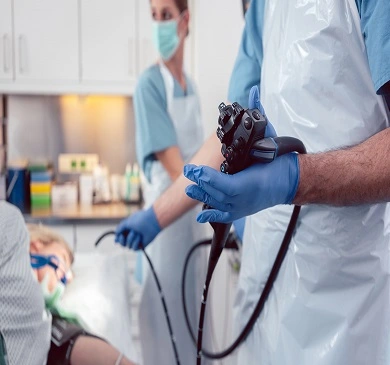
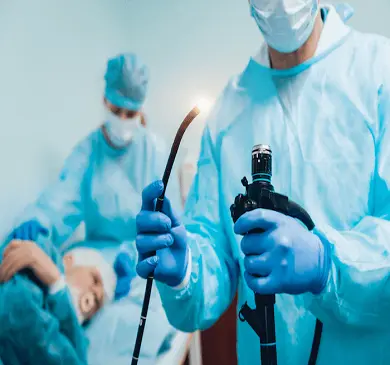
Endoscopy is a medical procedure used to examine the interior of a person's digestive tract or other internal organs using an instrument called an endoscope. The endoscope is a flexible tube equipped with a light and camera, which allows doctors to view images of the area being examined in real-time.

Types of Endoscopy:

  • Gastroscopy (Upper Endoscopy): Used to examine the esophagus, stomach, and upper small intestine (duodenum). It's useful for diagnosing ulcers, acid reflux, or abnormal growths
  • Colonoscopy: Involves inserting an endoscope through the rectum to view the entire large intestine (colon). It's commonly used to screen for colon cancer, detect polyps, and check for inflammatory bowel disease.
  • Sigmoidoscopy: A less extensive version of a colonoscopy, which only examines the lower part of the colon (sigmoid colon).
  • Bronchoscopy: Used to examine the lungs and airways to diagnose infections, blockages, or tumors.
  • Cystoscopy: Performed to inspect the bladder and urethra, usually for signs of infection, stones, or tumors.
    • 2. Procedure
  • Preparation: Depending on the type of endoscopy, preparations might include fasting (for upper endoscopy) or taking a laxative (for colonoscopy). Some patients may need to stop certain medications prior to the procedure.
  • Insertion of the Endoscope: The endoscope, a thin, flexible tube with a camera and light at the tip, is inserted through a natural opening (mouth or anus) or through a small incision, in the case of laparoscopy.
  • Examination: The doctor watches the video feed on a monitor to observe abnormalities or perform minor procedures like tissue biopsies, polyp removal, or stopping bleeding.
  • Duration: The length of the procedure varies. Most endoscopies take between 15 and 45 minutes.

    • 3. Uses of Endoscopy

    Endoscopy has both diagnostic and therapeutic applications:

    i) Diagnostic Purposes:

  • Detecting inflammation, ulcers, or tumors
  • Taking biopsies to test for cancer or infections.
  • Evaluating symptoms such as bleeding, persistent pain, or digestive issues.
  • endoscopy-hospital-in-dindigul
    best-endoscopy-hospitals-in-dindigul

    ii) Therapeutic Purposes:

  • Removing polyps (as in a colonoscopy).
  • Treating bleeding ulcers.
  • Inserting stents to relieve obstructions.
  • Removing foreign objects.

    • 4. Post-Procedure Care
  • Patients who received sedation usually need to rest for a few hours.
  • Eating and drinking are typically resumed gradually, based on the type of procedure.
  • It's important to monitor for any signs of complications, such as fever, worsening pain, or persistent bleeding.
  • Quicker Recovery: Patients return to normal activities faster compared to open surgeries.
  • Endoscopy has revolutionized diagnostic medicine by providing a clear view of internal structures without the need for major surgery. It has greatly improved the detection of gastrointestinal, respiratory, and urological conditions.